All Categories
Featured

Comparing Quotes From Washington DC Solar Panel Installation Companies
Table of Contents
- – Finding Reliable Washington DC Solar Panel Inst...
- – Comprehending The Influence Of The $330–$360 P...
- – Ways You Can Assess Washington DC Solar Panel ...
- – Does Your Washington DC Solar Panel Installati...
- – What Does A Solar Panel Installation Quote Cov...
- – How You Can Utilize Service Capacity To Assess...
Finding Reliable Washington DC Solar Panel Installation Companies For Your Property
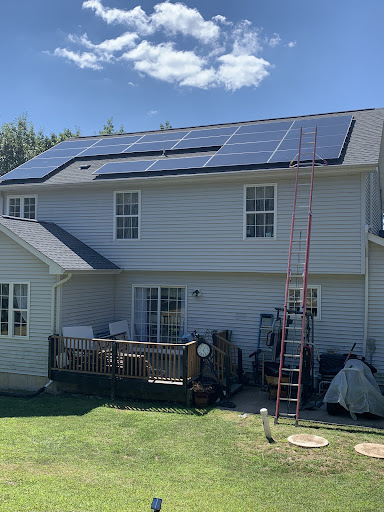
When you begin researching Washington DC Solar Panel Installation Companies, you are essentially initiating a long-term financial strategy to counterbalance your utility expenses through localized energy production. Because a standard 9.63 kW system requires a substantial upfront investment typically ranging from $24,828 to $33,590, understanding the technical and financial variables is essential to ensuring your project remains economically viable. You must maneuver complex factors such as grid utility hookup, the precise value of a Renewable Energy Certificate, and the lasting implications of your roof suitability. By carefully evaluating how different installers approach these mechanical and regulatory requirements, you can differentiate between providers who offer genuine value and those who simply aim for a quick sale. This article provides the analytical framework you need to assess your options and obtain a high-performance system that functions reliably for its 25 to 30-year operational duration.
“Look for professionals with industry-recognized credentials that verify their expertise.” — Lumina Solar
Comprehending The Influence Of The $330–$360 Per MWh SREC Price On Washington DC Solar Panel Installation Services.
The $330–$360 per MWh SREC price represents a primary financial factor that influences how you assess the projected return on investment when choosing among Washington DC Solar Panel Installation Companies. Because these credits provide a recurring income stream for every megawatt-hour your system produces, they operate as a performance-based subsidy that effectively lowers your long-term cost of ownership beyond simple electricity bill savings.
“Solar for All aims to bring the benefits of solar energy to 100,000 low to moderate income families in the District.” — doee.dc.gov
Beyond these market-based credits, your financial strategy should integrate several structural mechanisms designed to improve the viability of your project:
- Net Energy Metering: This policy allows you to send surplus electricity to the grid at the full retail rate, fundamentally using the utility infrastructure as a virtual battery to balance your consumption during non-daylight hours.
- Low-income Solar Program: This initiative offers targeted financial aid for income-eligible residents to guarantee equitable access to the advantages of localized energy generation.
- Federal tax considerations: It is essential to note that the federal residential solar tax credit no longer applies to systems installed after December 31, 2025, implying you must account for this expiration into your immediate project timeline.
When you consult with an contractor, ask them to provide a detailed projection of your expected annual SREC income based on your system’s projected production capability rather than relying on generic averages. Before concluding your contract, ensure that your chosen solar company has a proven administrative process for registering your system with the appropriate tracking registries to ensure you begin receiving these payments without interruption.
When designing a photovoltaic installation, you must first confirm your roof suitability to ensure the structure can support a system with a 25 to 30 year lifespan, as this physical foundation determines your long-term efficiency. To navigate the typical $24,828 to $33,590 cost range, you should contact a reputable Solar Panel Installation to evaluate your offer against the average $3.00 to $3.40 per watt industry standard while considering the $7,000 to $18,000 added price of home battery. Because your payoff period is greatly influenced by leveraging the Solar Credit market and local net energy metering, you must confirm that your chosen vendor maintains proper qualification and provides a comprehensive workmanship warranty to protect your utility connection and long-term financial returns.
Ways You Can Assess Washington DC Solar Panel Installation Businesses Using Warranty Metrics
Washington DC solar panel installation companies reviewed and compared through the lens of warranty coverage offer a vital layer of financial protection for your investment. Because a high-quality solar system installation is intended to operate for 25 to 30 years, you must differentiate between the two main types of protection: The manufacturer’s performance guarantee and the contractor’s workmanship warranty.
Manufacturer efficiency guarantees typically cover the hardware itself, guaranteeing the modules generate a specific percentage of their rated power over a 25-year period. In contrast, a workmanship warranty protects you against flaws resulting from the setup process, such as roof penetrations, mounting failures, or wiring errors. When assessing an installer, verify the following protection components:
| Warranty Type | Typical Coverage Duration | Primary Purpose |
|---|---|---|
| Manufacturer Performance | 25 Years | Equipment deterioration and power yield |
| Workmanship | Varies by Installer | Labor, installation, and structural integrity |
| Price-Match Guarantee | At Contract Signing | Affordable rates for equivalent scopes |
Some installers distinguish themselves by offering price-match guarantees, which require you to provide a comparable written bid from a competitor to initiate a price adjustment. Always guarantee that the work guarantee is clearly defined in your contract, as this document dictates your recourse if the system requires fixes due to incorrect mounting or defective electrical linkages soon after the installation is finished.
Request a copy of the vendor's labor warranty document to verify the precise duration and particular conditions under which labor costs for repairs are covered.
Does Your Washington DC Solar Panel Installation Come With A 25–30 Year Panel Lifespan?
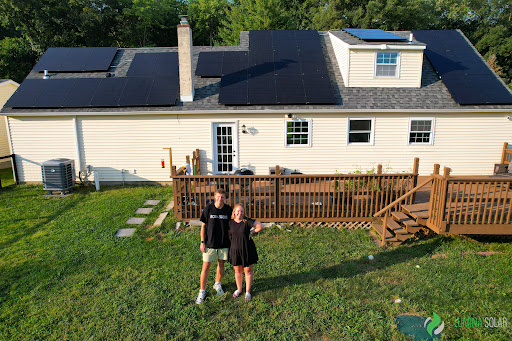
The 25–30 year panel durability represents the durable operational window during which your hardware remains efficient enough to warrant the initial investment. When you assess Washington DC companies specializing in solar panel installation, you are looking for long-term performance stability that ensures your system continues to produce electricity effectively as it ages. Over these decades, the panels act as a hedge against the inevitable inflation of utility rates while simultaneously generating steady revenue through each Solar Renewable Energy Credit earned by your system.
“A Berkeley Lab survey of U.S. solar industry professionals shows that the average operational lifespan of a solar panel has increased from around 20 years in 2007 to 25-35 years in 2025.” — facebook.com
While the hardware is designed for longevity, its actual output will gradually decline due to environmental exposure and internal component degradation. Grasping how your system efficiency changes over this duration is essential for forecasting your long-term monetary returns:
- Years 1–10: Peak performance period where panels usually operate at or near their initial rated capacity.
- Years 11–20: Gradual performance decline, typically occurring at a rate of 0.5% to 0.8% annually as silicon cells undergo natural wear.
- Years 21–30: Stabilization phase where the system continues to generate meaningful power, though output may remain at 80% to 85% of its initial nameplate rating.
Review the specific degradation rate documentation provided by the manufacturer in your offer to understand exactly how much energy output you can expect as your system approaches the end of its 30-year operational life.
What Does A Solar Panel Installation Quote Cover And Why Are 3 Quotes Minimum Recommended Required?
A 3 quotes minimum recommended approach ensures you understand exactly what you are paying for when comparing the top PV installation companies in Washington DC. Acquiring multiple documents allows you to confirm that every cost, from beginning site assessment to ultimate grid synchronization, is accounted for in the overall price.
“DC Code Section 29-943 limits condo association restrictions on solar installations — associations cannot effectively prohibit solar installations on owner-exclusive areas (rooftops).” — propertyzoned.com
When you evaluate a bid, you must seek for an itemized list of administrative and technical tasks. Many homeowners neglect to realize that the $29,209 midpoint cost can easily inflate if these essential services are treated as add-ons rather than inclusive line items. You should verify that your documentation explicitly addresses the following requirements:
- Permitting fees and municipal inspection costs
- Utility interconnection filing and clerical processing
- Solar Certificate registration assistance
- After-installation aftercare and performance tracking setup
- Structural engineering evaluations for roof suitability
The subsequent table illustrates how these components typically affect your financial planning when you compare different service tiers:
| Service Component | Financial Impact |
|---|---|
| Permitting & Inspection Fees | Typically $500–$1,500 |
| Utility Interconnection Filing | Frequently grouped, but can be a separate $300 fee |
| Solar Credit Enrollment | Vital for long-term income; verify as included |
| Aftercare & System Maintenance | Guarantees 25 to 30 years of operational health |
Compare the detailed line items across your three quotes to ensure no concealed fees exist for the administrative hurdles required to bring your system online.
How You Can Utilize Service Capacity To Assess A Washington DC Solar Panel Installation Company
Service capacity is the extent to which an company maintains specialized, local field crews to oversee ongoing system performance throughout the 25 to 30 year working lifespan of your equipment. When you prioritize Finding a reliable solar panel installation company in Washington DC, you must distinguish between firms that manage their own technicians and those that rely on third-party, outsourced labor. Because your system requires periodic monitoring and possible repairs to maintain its efficiency, the proximity of your vendor’s workforce directly determines how quickly your energy production is restored following a technical fault.
“DOB is dedicated to completing Solar Plan Reviews within 10 business days.” — dob.dc.gov
Consider the following operational differences when assessing the service infrastructure of your potential provider:
| Service Factor | Local In-House Crew | Outsourced/Distant Labor |
|---|---|---|
| Response Time | Typically 24 to 48 hours for priority service | Frequently postponed by travel or scheduling logistics |
| Technical Familiarity | Elevated; teams know your specific grid hookup | Variable; technicians may miss system history |
| Accountability | Directly managed by the main solar company | Often fragmented between firm and subcontractor |
Reliance on remote, distant labor often leads to considerable wait times for routine maintenance or system restarts, which directly affects your ability to generate Solar Credit income. By ensuring your solar company employs local staff, you lessen the risk of prolonged downtime during the critical 25 to 30 year window of system efficiency.
Ask prospective installers to supply a physical address for their nearest service hub and request a written policy regarding their maximum response time for emergency service calls.

Table of Contents
- – Finding Reliable Washington DC Solar Panel Inst...
- – Comprehending The Influence Of The $330–$360 P...
- – Ways You Can Assess Washington DC Solar Panel ...
- – Does Your Washington DC Solar Panel Installati...
- – What Does A Solar Panel Installation Quote Cov...
- – How You Can Utilize Service Capacity To Assess...
Latest Posts
How Do You Locate Reliable Pennsylvania Solar Panel Installation Companies?
Questions For Delaware Solar Panel Installation Companies Before You Purchase
Steering Clear Of Typical Pitfalls With Delaware Solar Panel Installation Companies
More
Latest Posts
How Do You Locate Reliable Pennsylvania Solar Panel Installation Companies?
Questions For Delaware Solar Panel Installation Companies Before You Purchase
Steering Clear Of Typical Pitfalls With Delaware Solar Panel Installation Companies